

 By
By Purchasing a flat is one of the most important financial and personal decisions you will make in your life. Buying a flat is usually done in your life very few times. Whether it is your first domestic purchase or an investment in real estate, you have to carefully analyze your options in order to make the right choice. Not just the price, but also the various factors can determine your lifestyle, future property price, and your general satisfaction with your apartment.
Here are the most important factors to consider before buying a flat.
1. Location – The Foundation of a Good Investment
The position of an apartment significantly affects the apartment value, convenience, and potential for further appreciation. The position is significant when it comes to ease of daily living. A well-connected neighborhood with schools, hospitals, shopping malls, offices, and public transport is beneficial.
Why it matters:
- Better resale value
- Easy daily commute
- Improved quality of life
- Future scope
- Heps in good view from your property
2. Builder Reputation and Track Record
A reputable builder will be more likely to deliver superior construction, finish their projects on time, and offer improved customer service. You should do research on past work, reviews, and delivery history before making your decision. Importance of builder comes from the fact that it does the construction work, meaning a good builder will deliver the project in time or even earlier than planned. Unfortunately, in modern times many builders are unable to do proper work because of which we need to take all the issues into account and history of the builder.
Look for:
- Timely project completion
- Construction quality
- Customer satisfaction
- Legal compliance
- Builder debt
- Builder reputation in market
3. Legal Verification
Never purchase a flat without verifying all legal documents. Ensure the property has clear ownership, approved building plans, occupancy certificates (for ready properties), and all required government approvals.
Important documents include:
- Title deed
- Sale agreement
- Building approvals
- Property tax receipts
- Occupancy/Completion Certificate
Legal verification protects you from future disputes and financial risks.
4. Amenities and Lifestyle Facilities
Modern residential projects offer amenities that improve comfort and convenience. However, don’t pay for facilities you may never use.
Popular amenities include:
- Clubhouse
- Gym
- Swimming pool
- Children’s play area
- Garden
- Walking track
- Community hall
- Security systems
Choose amenities that genuinely match your lifestyle.
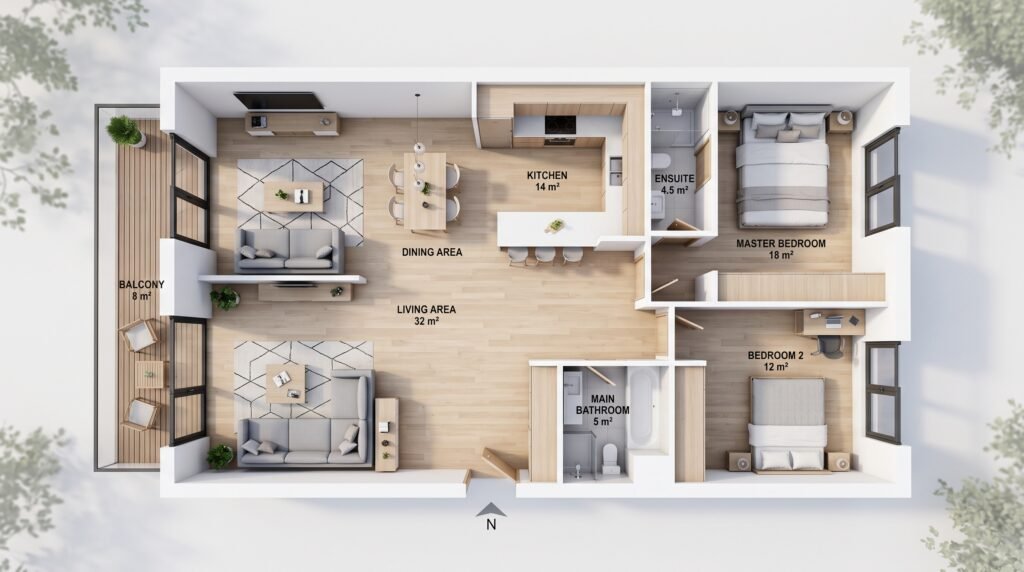
5. Flat layout
Flat is also important aspect of buying flat that define the ventilation and sunlight can come properly.
It is also show the outside view from the flat. Layout show actual area that you get. Various things that consider in layout :
- Construction Quality
The appearance of a flat can be attractive, but construction quality determines its long-term durability. Inspect the materials used, wall finishing, flooring, plumbing, electrical fittings, and structural quality.
Poor construction can lead to expensive repairs later.
- Carpet Area
Carpet area is the net usable floor area inside an apartment, including the space covered by internal partition walls but excluding external walls, balconies, and utility ducts. It represents the actual liveable space where occupants can place furniture and move around.
- Buildup Area
Built-up area is the total constructed area of the unit, calculated as the carpet area plus the thickness of external walls, exclusive balconies, terraces, and utility ducts. It is always larger than the carpet area and provides a comprehensive view of the total covered space, which influences property valuation and construction costs.
- Natural light & ventilation
Natural light and ventilation are critical factors for health, comfort, and property value when buying a flat. Proper cross-ventilation ensures fresh air circulation, reducing humidity, mold, and airborne pollutants, while natural light regulates circadian rhythms, boosts mood, and reduces reliance on artificial lighting.
- Zoning & privacy
Ensure bedrooms are placed away from high-noise zones like the kitchen or living room. Keep public or guest spaces (like the powder room or living area) near the entrance.
- Furniture Proportionality
Measure your specific furniture such as beds, sofas, and wardrobes against the room’s dimensions. Look for smart storage solutions, including built-in closets and corners, to maximize usable space.
6. Safety and Security
Your family’s safety should be a top priority. Evaluate the project’s security features before making a purchase.
Look for:
- CCTV surveillance
- Gated community
- Security guards
- Fire safety systems
- Emergency exits
- Earthquake-resistant construction (where applicable)
A secure environment provides peace of mind for residents.
7. The Cost Estimation of Flat
It’s important to do a realistic budget estimation before searching for a house. Home buyers should not only focus on the advertised price of the property, as the actual cost of buying a flat includes many other costs which must be planned ahead to avoid monetary troubles during the house-buying process.
Expenses to Consider
- Base Purchase Price: The agreed cost of the flat before any additional charges.
- Floor Rise Charges: Many builders charge an additional premium for flats located on higher floors, as they often offer better views, improved ventilation, and enhanced privacy. These charges are usually calculated on a per-square-foot basis and can significantly increase the total cost of the property.
- Parking Charges: Dedicated covered or open parking spaces are often priced separately from the flat and should be included in your overall budget.
- Maintenance Charges: Builders or housing societies may collect advance maintenance charges for the upkeep of common areas, security, elevators, and other shared facilities.
- Registration Charges: Government fees required to legally register the property in your name.
- Stamp Duty: A state government tax payable on property transactions. The applicable rate varies depending on the state and property value.
- GST (if applicable): Goods and Services Tax is applicable on under-construction properties but not on ready-to-move-in homes with a completion certificate.
- Legal and Documentation Charges: Expenses for legal verification of property documents, agreement drafting, and other professional services.
- Home Loan Processing Charges: If you’re financing the purchase with a home loan, banks may charge processing fees, valuation charges, technical inspection fees, and insurance premiums.
8. Future Appreciation Potential
Buying a flat is not just about living it’s also an investment. Study the area’s future growth prospects, including planned infrastructure projects, commercial developments, and employment hubs.
Properties in developing locations often deliver better long-term returns.
9. Maintenance Costs and Society Management
Many buyers overlook ongoing maintenance expenses. Monthly maintenance charges can significantly affect your overall cost of ownership.
Before buying, understand:
- Monthly maintenance fees
- Sinking fund contributions
- Parking charges
- Society rules
- Facility management quality
A well-managed housing society ensures better living standards and preserves property value.