
 By
By The 4P’s are important components of the marketing mix, which is an essential tool in creating an effective marketing strategy by using a variety of perspectives to gain insight into the marketplace.
Having clarity in the four primary elements that impact your company’s growth will allow you to create a better product-market fit, increase revenue/sales, understand how your customers make purchasing decisions, and expand the numbers of people who have access to your products.
Utilising the 4P’s of marketing also provides a framework for researchers to understand and address the motivations behind consumers behavior, which will ultimately lead to increased sales and create long-term loyalty from customers.
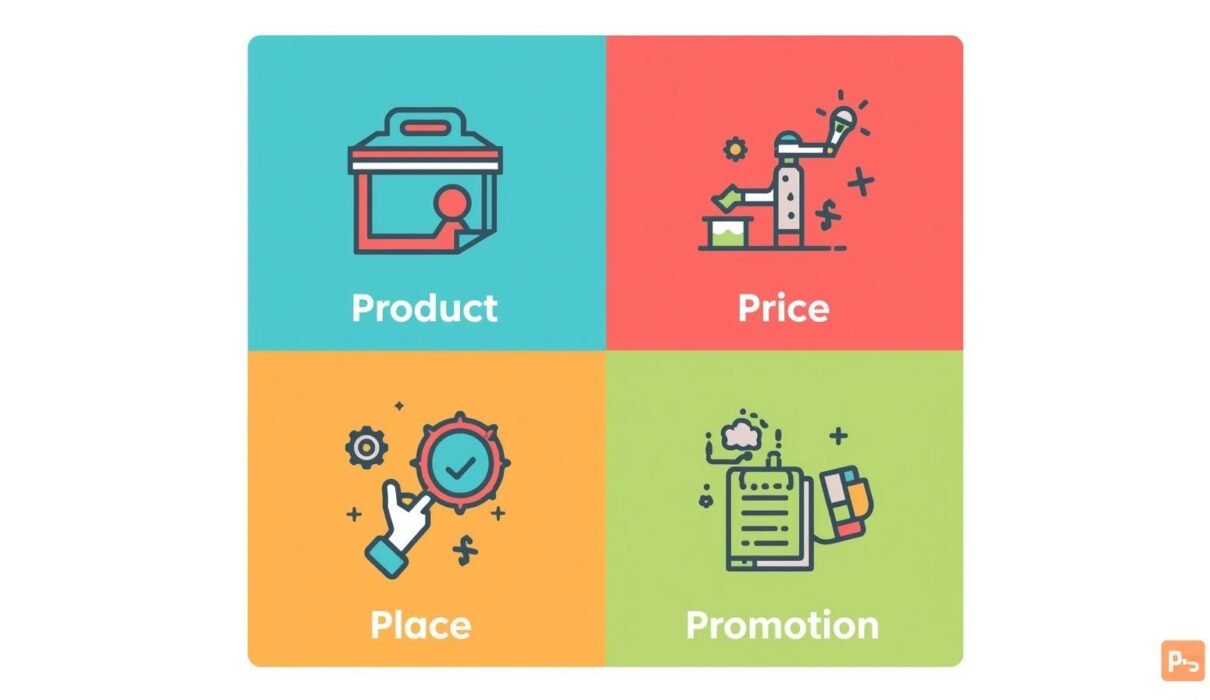
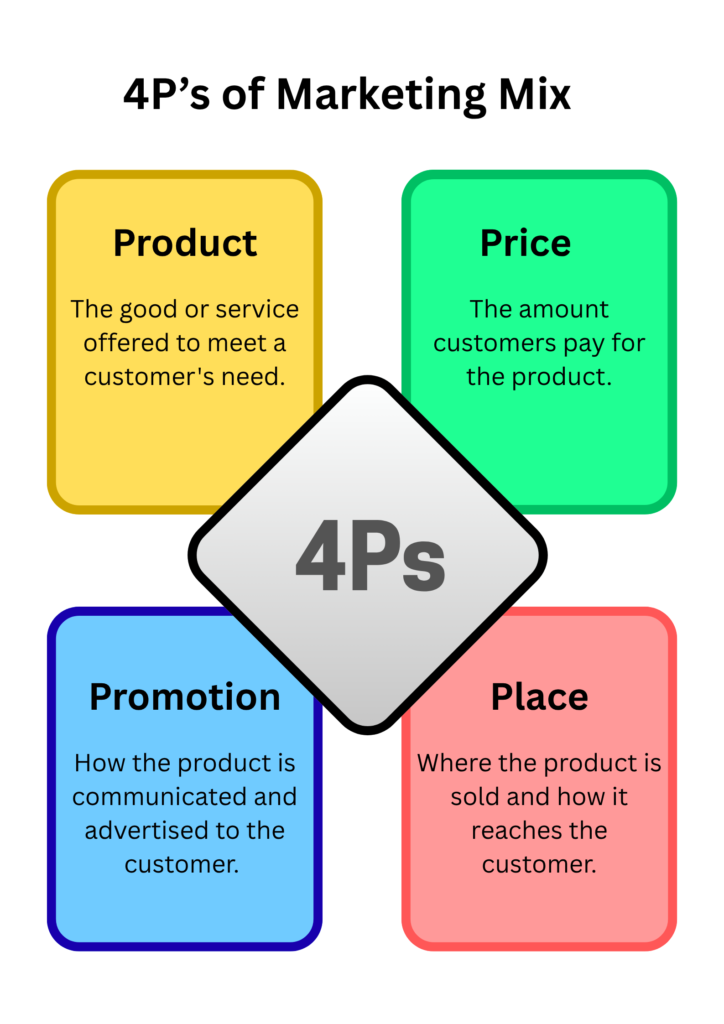
The 4p’s of marketing mix are:
1 product: What you are selling.
A product is a good or service that you offer to fulfill the needs or wants of the target market. The product is the foundation of the overall marketing strategy. A product is any item that is offered to someone to satisfy their needs. When building a product, you should focus on:
- Product Development:
This is about creating and improving your product over time. - Product Quality:
People expect value for their money. Good quality builds trust and encourages repeat purchases. - Product Lifecycle:
Every product goes through stages introduction, growth, maturity, and decline. Understanding this helps you plan updates or new versions.
2 Price: How much it costs and your pricing strategy.
Price is the amount of money customers are willing to pay for your product. It reflects the perceived value of the product and directly influences your sales, profitability, and market position.
Important aspects include:
- Pricing Strategy:
Decide how you want to price your product—premium (high-end), competitive (similar to others), or budget-friendly. - Price Elasticity:
This means how sensitive customers are to price changes. If a small increase causes big drop in sales, your product is price-sensitive. - Discounts and Offers:
Special deals, seasonal sales, or EMI options can attract more customers and increase sales.
3 Place: Where customers buy the product.
Place refers to the distribution channels and locations where your product is made available to customers. It involves getting the right product to the right place at the right time.
Key points include:
- Distribution Channels:
This could be direct your own website/store or indirect through retailers, wholesalers, or marketplaces. - Online vs. Offline:
Today, many businesses use both physical stores for experience and online platforms for convenience. - Accessibility:
Your product should be easy to find and buy. Think about delivery speed, store location, or app usability.
4 Promotion: How you communicate the value.
Promotion encompasses all the tactics used to communicate the value of your product to your target audience. It’s about persuading potential customers to choose your product over competitors.
It involves:
- Target Audience:
Understand your customers by their age, interests, needs, and habits. You can’t talk to everyone the same way. - Advertising:
This includes TV ads, social media ads, Google ads, etc. It helps create awareness. - Sales Promotion:
Short-term tactics like discounts, coupons, “buy one get one free” offers to boost quick sales. - Public Relations (PR):
Building a positive image through media coverage, events, or influencer collaborations.
1. AMUL – one of the largest dairy Company in India
Product
- Wide range: milk, butter, cheese, ice cream, chocolates
- Focus on quality, affordability and also build trust
- Strong emotional identity with farmer.
Amul doesn’t just sell dairy it sells pride and freshness
Price
Competitive pricing often cheaper than private brands
- Uses cost efficiency through cooperative model
- Targets mass market, not luxury
Strategy: “Affordable daily consumption” rather than premium margins
Place
Available in every kirana store, supermarkets, online platforms and even small shops.
- Strong cold-chain distribution network across India
- Effective supply chain and logistics
Promotion
- Famous Amul Dudh ads
- Minimal celebrity dependency
- Relies on humor and relevance
Real-time marketing before it became a trend
2. ZOMATO – Food, Delivered with Data
Product
- Food delivery, dining discovery, table booking
- Add-ons: Zomato Gold / Pro, grocery experiments
The product is convenience, choice and speed not food itself
Price (Dynamic & Psychological)
- Delivery fees vary
- Dynamic pricing
- Heavy use of:
- Discounts
- Subscription models
- Surge pricing
Strategy: “Hook with discounts, retain with convenience”
Place
- App-based service across cities
- Connects:
- Restaurants
- Delivery partners
- Customers
Unique: No physical store—place = digital platform + logistics network
Promotion (Bold & Relatable)
- Witty push notifications
- Social media humor & memes
- Influencer and app-based engagement
3. PIDILITE (Fevicol Brand) – The Emotional Bond
products: adhesives (Fevicol, Fevikwik, Dr. Fixit)
They turned a boring Product (glue) into a household name.
- Focus on durability, reliability
Unique: Sells solutions, not glue
Price
- Small affordable packs (₹5–₹10)
- Larger packs for industrial use
Strategy: “From daily users to professionals”
Place
Place focuses on strong relationships with carpenters
- Hardware stores, stationery shops, industrial supply chains
- Strong rural penetration
Available where the problem exists, not just retail hubs
Promotion
- Iconic Fevicol ads (humor-based, memorable)
- No heavy tech, they used just simple storytelling
Ads focus on product strength through humor, not features.
4P’s of marketing in digital marketing
1. Product
This is the heart of everything. In digital marketing, your product it’s the entire online experience.
It includes:
- Your website or app design
- How easy it is to use
- The quality of your product or content
Example, if you’re selling an online course, your product isn’t just the lessons—it’s also how smooth the platform feels and how valuable the content is.
2. Price
Price is all about how much your customer needs to spend and how you present that value.
In the digital world, this can be:
- Monthly subscriptions (like Netflix-style)
- Free trials or freemium models
- Discount codes and limited-time offers
3. Place
“Place” simply means where your product is available online.
This could be:
- Your website
- Mobile apps
- Social media platforms
- Online marketplaces
4. Promotion
This is how you let people know about your product and convince them to buy.
It includes:
- Social media posts and ads
- Google search results (SEO)
- Paid advertising
- Emails and influencer collaborations