
 By
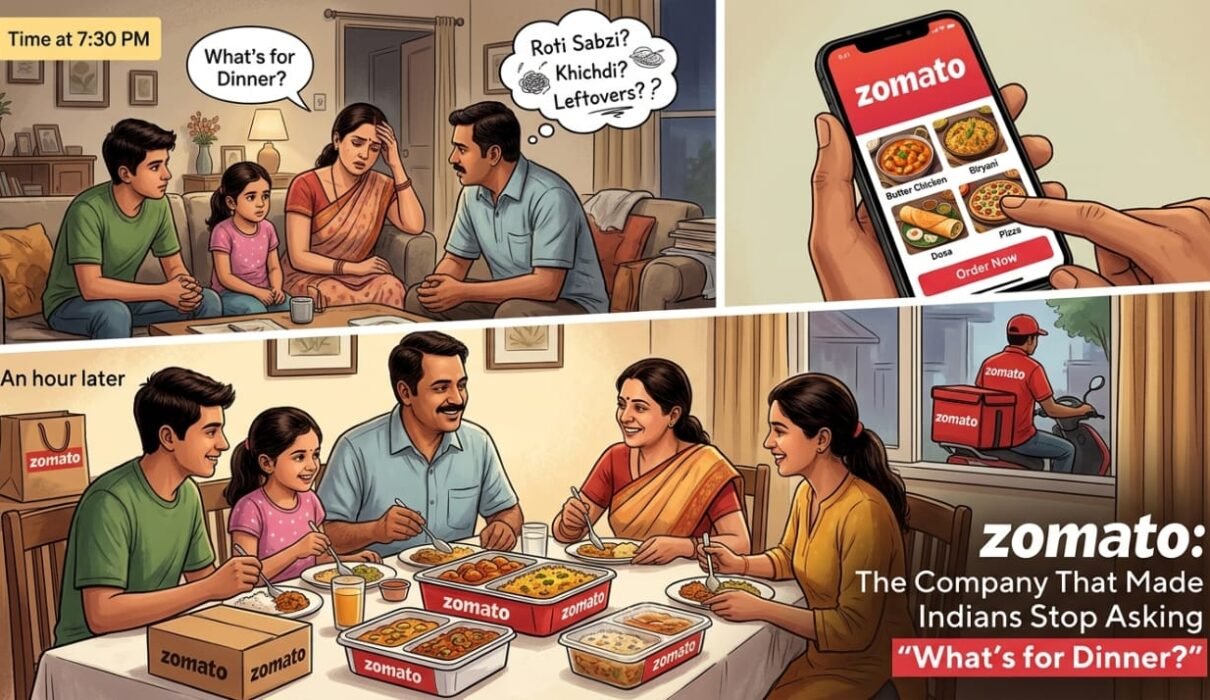
By Zomato: The Company That Made Indians Stop Asking “What’s for Dinner?”
Imagine telling someone in 2008 that one day Indians would happily spend ₹500 or more every month just on food delivery charges without thinking twice. Most people would probably laugh at that idea.
Back then, ordering food was not easy. People had to search for restaurant phone numbers on pamphlets or newspaper ads, call restaurants that often had busy phone lines, repeat their address multiple times, and then hope the food arrived on time. It was a frustrating process that many people avoided unless absolutely necessary.
What changed after that?
It was not because Indians suddenly became much richer. It was not because restaurants became dramatically better. The real reason was that one company solved a problem that most people didn’t even realize existed.
That company was Zomato.
The Problem Nobody Noticed
In 2008, India did not have a food problem. Restaurants already existed. Customers already existed. Good food was available in almost every city.
The real problem was information.
People had very little information about restaurants. Menus were difficult to find. Reviews were almost non-existent. Ratings did not exist on a large scale. Most people chose restaurants based on recommendations from friends, random advertisements, or pure guesswork.
The founders of Zomato noticed something interesting. In many offices, employees would gather around cafeteria notice boards just to look at printed restaurant menus before deciding where to order food from.
It looked like a small and insignificant problem.
But history shows that many billion-dollar businesses are built by solving problems that everyone else ignores.
Google organized information. Uber organized transportation. Airbnb organized accommodation.
Zomato decided to organize food information.
Phase One : The Menu Company
Today, most people think Zomato started as a food delivery company.
It didn’t.
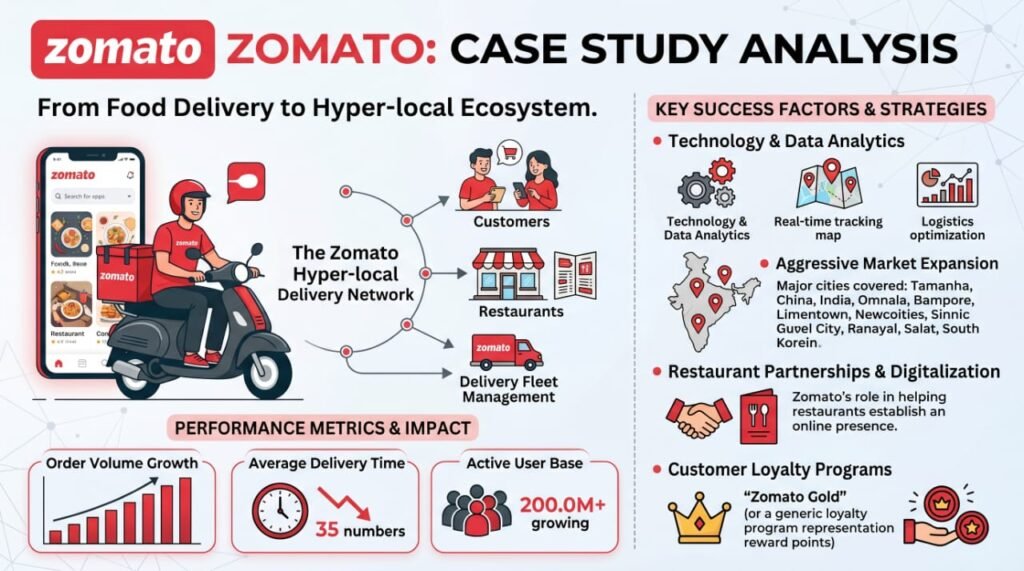
In its early days, Zomato was simply a menu company. The team scanned restaurant menus and uploaded them online so people could easily browse them.
It sounds boring, doesn’t it?
And that was exactly why almost nobody paid attention to it.
While other startups were chasing flashy ideas, Zomato was quietly building something much more valuable—a massive database.
A database of thousands of restaurants.
A database of thousands of menus.
A database of thousands of customer interactions.
Every search, every click, and every visit gave Zomato new insights. The company slowly learned where people wanted to eat, what cuisines they preferred, how often they ordered food, and how customer preferences changed over time.
Without realizing it, users were helping Zomato build the foundation for its future business model.
The Secret of How Zomato Became Successful that Asset Nobody Talks About
Many people believe Zomato’s biggest strength is its delivery network.
But that may not be its most valuable asset.
Its real strength is data.
Every time someone opens the app, searches for food, reads reviews, or places an order, they leave behind valuable information. Over time, Zomato learns about customer preferences, spending habits, lifestyles, eating patterns, work schedules, and purchasing behavior.
When millions of people use the platform every day, the company gains an extraordinary understanding of consumer behavior.
This information is incredibly valuable. It helps restaurants understand what customers want, which dishes are becoming popular, when demand is highest, and how they can improve their business.
In many ways, every order becomes a small behavioral report that helps the platform learn more about its users.
The Psychological Formula Behind Zomato’s Success
Have you ever opened Zomato just to order food and then spent 20 minutes scrolling through options?
That is not an accident.
Zomato has transformed food ordering into an experience that feels almost like entertainment.
Ratings create curiosity.
Food photos create desire.
Reviews build trust.
Discounts create urgency.
Recommendations provide comfort and reduce decision fatigue.
The platform encourages users to explore. Sometimes people open the app without knowing what they want to eat. By the time they finish browsing, Zomato has already helped them make a decision.
The company doesn’t just deliver food. It guides choices.
How Zomato Changed Indian Consumer Behavior
Perhaps Zomato’s biggest achievement is not technological.
It is behavioral.
Before platforms like Zomato became popular, ordering food from outside was relatively uncommon for many families. Discovering new restaurants was difficult. Deliveries were unreliable and often inconvenient.
After Zomato, things changed significantly.
Ordering food became simple.
Trying new restaurants became normal.
Customer reviews became more influential than traditional advertisements.
People became more willing to experiment with different cuisines and dining experiences.
The company did not simply create an app. It changed how millions of Indians think about food.
Very few companies succeed in changing consumer behavior on such a large scale.
The Dark Side of How Zomato Became Successful
Every success story comes with difficult questions, and Zomato’s journey is no different.
As the company expanded, debates began to emerge.
Can heavy discounting continue forever?
Are restaurants becoming too dependent on food delivery platforms?
Are delivery partners being compensated fairly?
Can a company balance profitability with rapid growth?
These are complex questions with no easy answers.
However, they reveal an important business lesson.
Growth creates opportunities, but it also creates responsibilities.
The larger a platform becomes, the greater the challenges it must manage.
The Real Business Lesson
Many people look at Zomato and conclude:
“I should build a food delivery app.”
But that is actually the wrong lesson.
The real lesson is much simpler.
Do not start with a product.
Start with a problem.
Zomato did not begin with delivery bikes, logistics networks, or quick commerce. It began with restaurant menus.
The company solved a small but real problem extremely well. Only after building trust and understanding customer behavior did it expand into larger opportunities.
Many startups fail because they chase massive opportunities before solving even one meaningful customer problem.
Zomato took the opposite approach.
And that made all the difference.
What Happens Next?
The future of food delivery may not be about delivering food faster.
It may be about predicting customer needs before they even search.
Imagine opening an app that already knows what you are likely to eat tonight, which restaurant you will choose, how much you are willing to spend, and the exact time you are most likely to place an order.
That future is closer than many people realize.
The companies that win in the future may not necessarily be the fastest. They may be the ones that understand human behavior the best.
And that is what makes Zomato’s story so fascinating.
At its core, Zomato was never just a food delivery company.
It was a company that understood habits.
And in business, there are very few assets more valuable than becoming part of a customer’s daily habit.